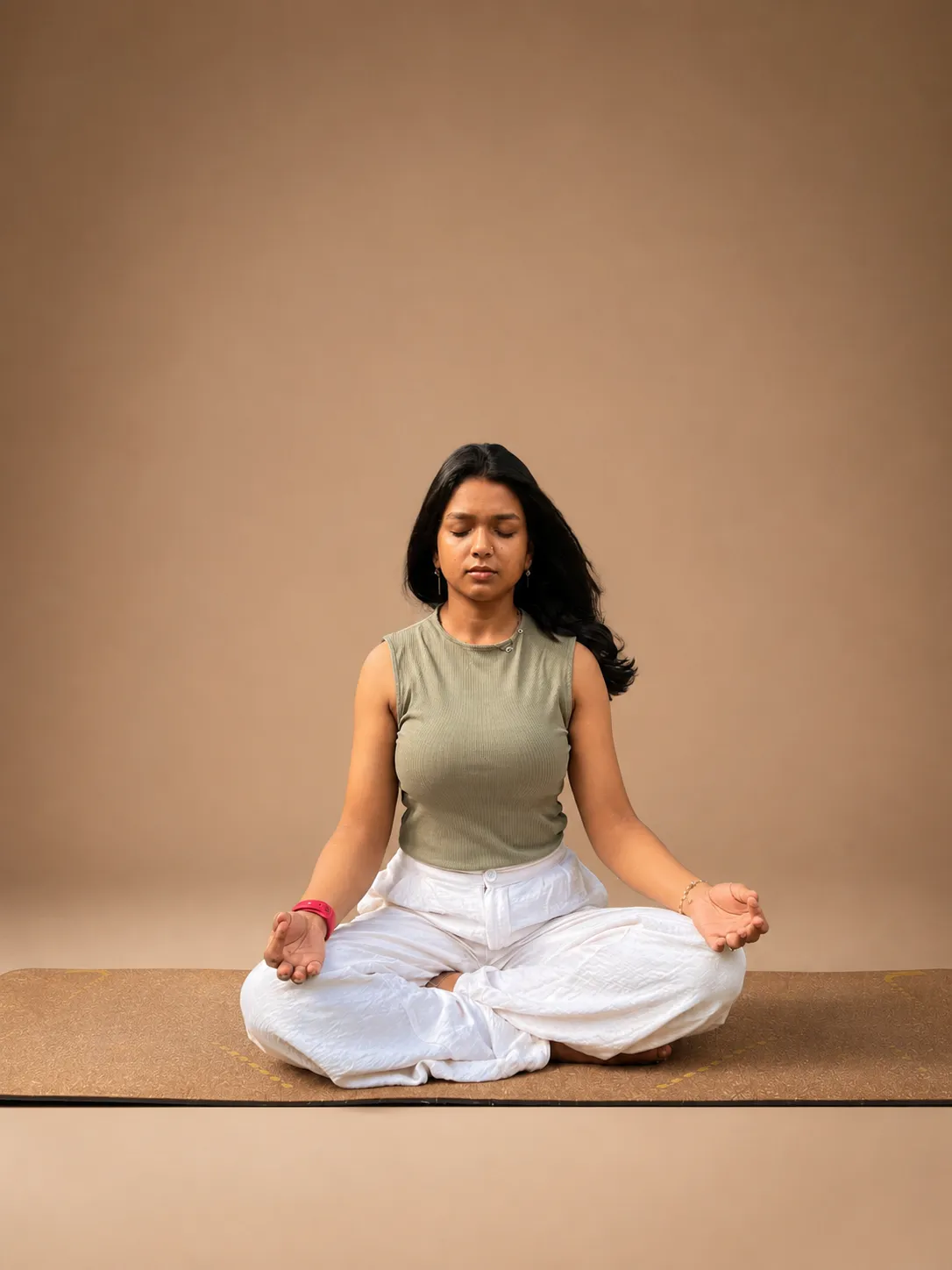
“The breath is the only function of the body that is both involuntary and completely under your conscious control. That gap — that doorway — is where yoga lives.”
Stress has become the background noise of modern life. The tight shoulders at 3pm. The mind that won’t stop at midnight. The shallow chest breathing that follows you from meeting to meeting. What most people don’t realise is that the body already holds the antidote — in the rhythm of the breath.
Yoga has addressed stress at its physiological root for thousands of years — not as an escape from life, but as a return to the body’s own intelligence. Here is exactly how it works, with practices you can begin today. They form the calming combination inside our Yoga for Stress program.
A note before you begin
This is supportive practice, not a medical treatment. Yoga complements your healthcare — it does not replace it. For a diagnosed condition, please practise alongside your doctor’s advice.
Why stress lives in the body, not just the mind
When you meet a stressor — a difficult email, a traffic jam, an argument — the sympathetic nervous system fires: heart rate rises, muscles tense, breath turns shallow. This fight-or-flight response is brilliant for short-term threats. The problem is that modern stressors rarely resolve, so we live in low-grade chronic activation — cortisol elevated, sleep fragmented, the body braced for a threat that never passes.
Yoga and breathwork are direct invitations to the parasympathetic nervous system — the rest-and-digest counterpart. The shift is not metaphorical; it is measurable in heart-rate variability, cortisol and breath depth.
What slow breathing actually does
- Stimulates the vagus nerve — the highway between brain and organs — signalling safety.
- Increases heart-rate variability, a key marker of stress resilience.
- Reduces cortisol within minutes and lowers blood pressure within a single session.
- Reactivates the prefrontal cortex (calm reasoning) over the amygdala (reactivity).
The Ayurvedic view: vata and the restless mind
Classically, chronic stress signals aggravated vata dosha — the wind-like energy governing the nervous system. In excess, the mind becomes like a browser with too many tabs open. The prescription is grounding: warmth, regularity, slowness. Pranayama and restorative yoga are deeply vata-pacifying.
Stress is not a mental problem with a mental solution. It is a physiological state — and yoga addresses it physiologically first.
Three pranayama practices for stress relief
1. Nadi Shodhana — Alternate Nostril Breathing
One of the most balancing pranayamas — “channel cleansing” — harmonising the cooling and activating energy channels.
How to practise: Sit tall. Close the right nostril with the thumb, inhale left for 4. Close both, retain 4. Exhale right 4. Inhale right 4. Retain. Exhale left 4 — one round. Build to 10.
2. Bhramari — Humming Bee Breath
The vibration of the hum stimulates the vagus nerve directly through the throat and chest — one of the fastest tools for moving from agitation into stillness.
How to practise: Close the ears with the thumbs, rest the fingers over the eyes. Inhale through the nose; on the exhale make a steady humming sound, lips closed. Feel the vibration in the skull and chest. Five to seven rounds.
3. Extended Exhale Breathing
The exhale is your physiological brake pedal. Any ratio where the exhale is longer than the inhale shifts you toward parasympathetic dominance — no experience required.
How to practise: Breathe in for 4, hold lightly for 4, breathe out slowly for 6–8. An unhurried release, never a forced push. Use it in traffic, in a queue, or at 3am with a running mind.
Asanas that dissolve physical tension
Pranayama is more powerful once the body has space to release. These postures open the chest, decompress the spine and release the psoas — your primary “stress muscle”:
- Balasana (Child’s Pose) — the forward fold signals safety and quietens the nervous system.
- Viparita Karani (Legs-up-the-Wall) — ten minutes is a full nervous-system reset.
- Supta Baddha Konasana (Reclined Butterfly) — opens the hips where tension collects.
- Paschimottanasana (Seated Forward Fold) — paired with extended exhale, profoundly calming.
- Savasana with Yoga Nidra — the most underused, most powerful stress tool of all. If sleep is the issue, the guide on better sleep with Yoga Nidra goes deeper.
Building a practice that sticks
The most common question I hear is “how long do I need to practise?” Even 10 minutes of pranayama daily produces measurable shifts within two weeks. The key is not duration — it is consistency. Begin with Nadi Shodhana (5 rounds) and one restorative posture, and notice your sleep and how quickly you recover from agitation.
Questions, answered
Can yoga really reduce stress?
Which pranayama is best for stress?
How long before yoga reduces my stress?
Let your shoulders drop
Breath, release and deep rest — the calming combination, guided live most days of the week.
Join the Stress program