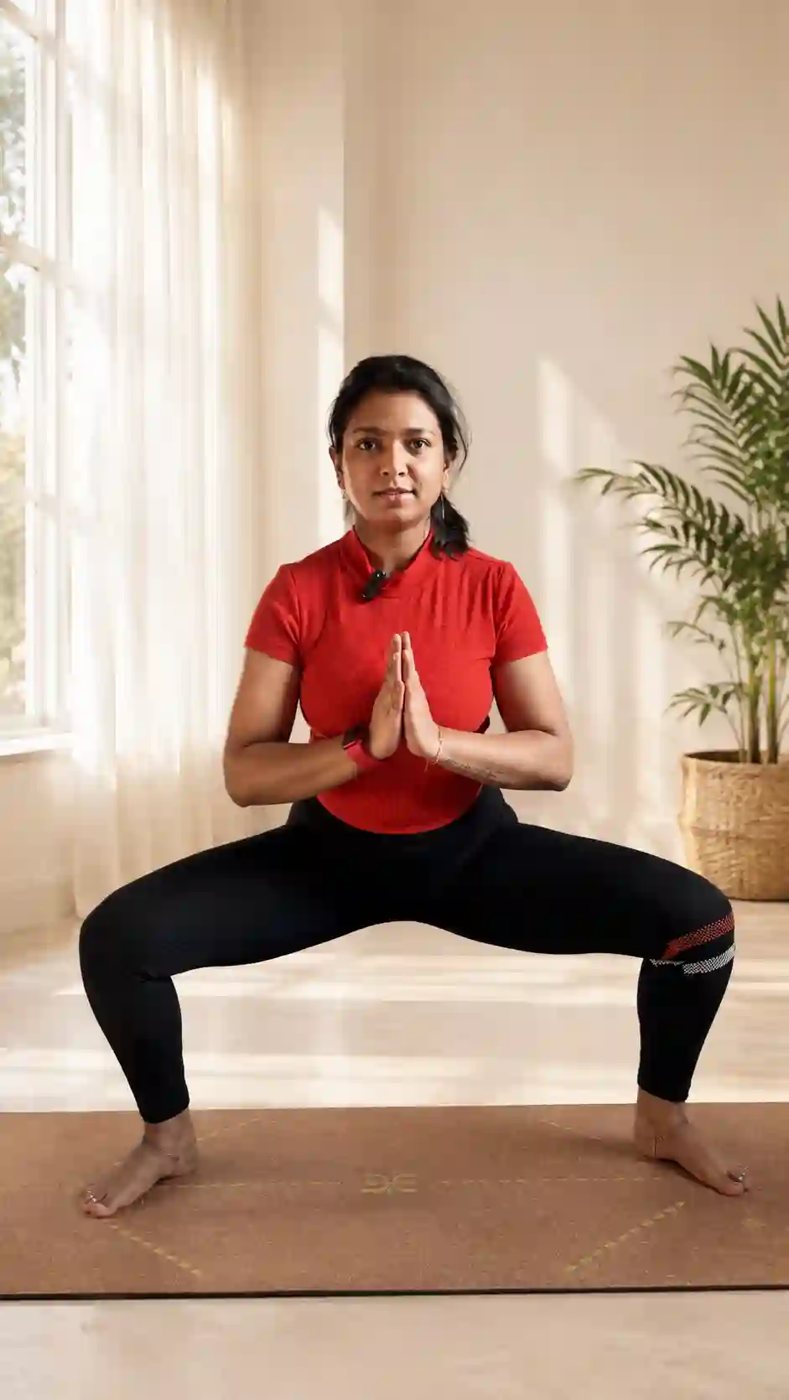
PCOS is not something to be conquered or punished away with high-intensity exercise and rigid diets. It is the body asking — often quite loudly — for a fundamentally different relationship with itself. Yoga offers that relationship.
Polycystic Ovary Syndrome affects roughly one in ten women of reproductive age, yet remains one of the most misunderstood conditions in women’s health. Characterised by hormonal imbalance, irregular cycles, elevated androgens and often insulin resistance, PCOS is systemic — not merely reproductive.
What strikes me again and again is how much the nervous system sits at the centre of it. Chronic stress and cortisol drive androgen production, worsen insulin resistance and disrupt ovulation. Any meaningful approach must therefore address stress — which is exactly what our PCOS & Hormonal Balance program is built around.
A note before you begin
This is supportive practice, not a medical treatment. Yoga complements your healthcare — it does not replace it. For a diagnosed condition, please practise alongside your doctor’s advice.
How PCOS and stress are connected
- Elevated cortisol signals the adrenals to produce more androgens — worsening acne, hair loss and irregular cycles.
- Chronic stress increases insulin resistance, a key driver of PCOS.
- Disrupted sleep further elevates cortisol, creating a self-reinforcing loop.
- Yoga interrupts the loop by activating the parasympathetic nervous system and improving insulin signalling.
The Ayurvedic lens: a kapha–vata imbalance
Ayurveda reads PCOS through the doshas — most often a mix of kapha (heaviness, cysts, sluggish metabolism) and vata (irregular cycles, anxiety, erratic digestion), with disrupted apana vayu, the downward energy governing menstruation and reproduction. The approach restores apana vayu through warmth, routine, grounding foods and practices that stimulate the pelvic region.
Yoga poses that support PCOS
1. Reclined Butterfly (Supta Baddha Konasana)
The single pose I would recommend to every woman with PCOS. Even five minutes daily opens the inner thighs and groin, increases blood flow to the pelvic organs and activates the parasympathetic response.
How to practise: Lie on your back, soles together, knees falling open (supported by blocks or blankets). One hand on the heart, one on the belly. Breathe slowly for 5–10 minutes.
2. Seated Butterfly (Baddha Konasana)
Stimulates the ovaries and uterus while opening the inner thighs. Classical texts recommend it specifically for menstrual irregularity.
How to practise: Sit with soles together, knees open, holding the feet. Sit tall — don’t slump. On each exhale let the knees settle closer to the floor without forcing. Stay 3–5 minutes.
3. Cobra (Bhujangasana)
A gentle backbend that stimulates the adrenals, supports thyroid function and wakes the digestive fire — sluggish digestion being a common kapha pattern.
How to practise: Lie face down, hands under shoulders. On an inhale peel the chest off the floor using the back muscles, elbows soft, pelvis grounded. Hold 5–6 breaths, lower on the exhale. Three rounds. Keep it low and controlled.
4. Bridge (Setu Bandhasana)
Stimulates the reproductive and endocrine organs, strengthens the pelvic floor and helps regulate the thyroid — one of the most complete asanas for hormonal health.
How to practise: Lie on your back, knees bent, feet hip-width. Press the feet, lift the hips on an inhale, chin drawing slightly toward the chest. Hold 8 breaths, lower slowly. Three rounds.
5. Legs-Up-the-Wall (Viparita Karani)
A powerful regulator of the endocrine system — the reversed blood flow supports the hypothalamic-pituitary-ovarian axis disrupted in PCOS. The practice to come to daily, even when everything else falls away.
Pranayama for hormonal balance
Because PCOS is so tied to the stress response, breathwork may matter even more than asana. These directly reduce cortisol and support hormonal communication — they sit at the heart of our Meditation & Pranayama classes:
- Nadi Shodhana (alternate nostril) — 10 rounds morning and evening to balance the nervous system.
- Bhramari (humming bee) — 7 rounds to stimulate the vagus nerve and calm the hypothalamus.
- Kapalabhati (breath of fire) — 2–3 minutes to wake digestion and support oestrogen clearance. Avoid during menstruation and with uncontrolled hypertension.
What to approach carefully with PCOS
- High-intensity exercise can spike cortisol and worsen androgen elevation — gentle-to-moderate movement is more appropriate.
- Aggressive caloric restriction increases stress hormones.
- Hot or Bikram yoga can aggravate inflammation if pitta is already elevated.
- Irregular practice — PCOS thrives in irregularity; consistent daily practice is dramatically more effective.
PCOS is not a punishment. It is the body drawing a boundary and asking for a different kind of care. The practice is to listen — and to begin.
Questions, answered
Can yoga really help PCOS?
Which yoga poses are best for PCOS?
How often should I practise yoga for PCOS?
You deserve a practice built around your body
Gentle, Ayurveda-rooted yoga for women’s hormonal health — guided live, with warmth.
Explore the PCOS program